
Key Takeaways
- Before attending holiday gatherings, communicate your dietary needs with loved ones, offer to bring a bariatric-friendly dish, and prepare strategies for navigating food-focused situations.
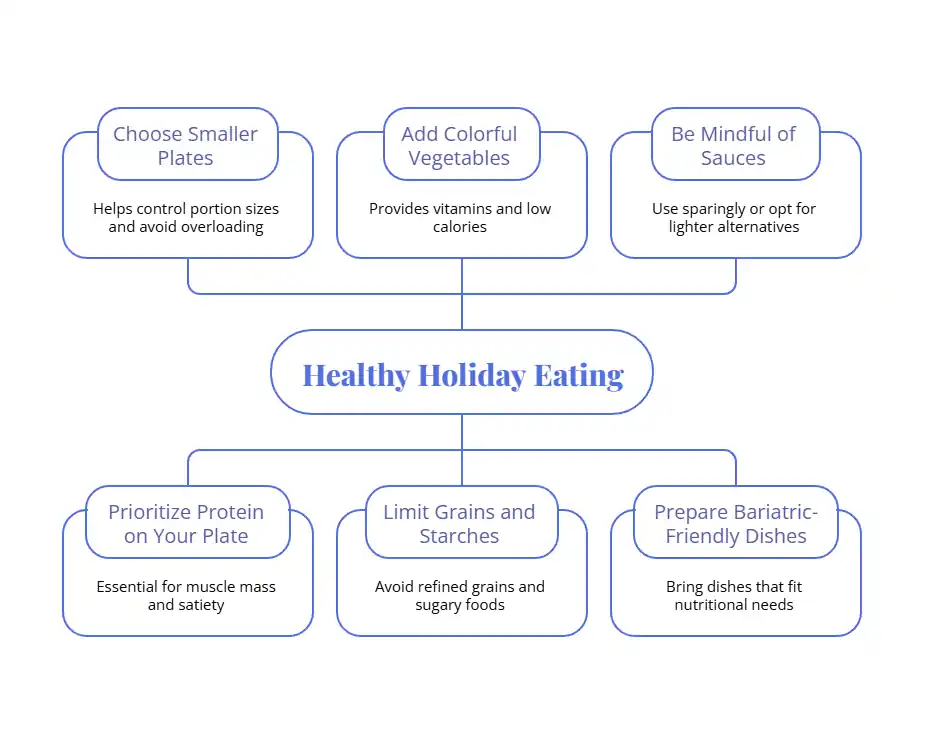
- Use smaller plates, prioritize protein, add colorful non-starchy vegetables, limit grains and starches, and be mindful of high-calorie sauces and dressings.
- Eat slowly, pause between bites, and listen to your body's fullness signals. It takes about 20 minutes for your body to register that you're full.
- It's okay to politely decline food. Thank people for their kindness, briefly explain that you're following a specific diet for your health, and redirect the conversation to enjoying time together rather than focusing on food.
- Maintain your fitness routine by incorporating walks, at-home workouts, or active holiday traditions. Make time for stress-relief activities like meditation or simply stepping away for a few minutes of fresh air.
- The holidays can be challenging, but you don't have to navigate them alone. Reach out to Atlanta Bariatrics for guidance, support, and personalized strategies to help you maintain your health goals while still enjoying the season.
Contact Us(opens in a new tab)
Table of Contents
How to Navigate the Holidays After Bariatric Surgery

The holiday season is often filled with decadent treats and hearty meals that may seem daunting to anyone who recently underwent weight loss surgery. While the festivities typically focus on family, thankfulness, and joy, navigating the temptations at every gathering can be overwhelming.
At Atlanta Bariatrics, we understand these unique challenges. As a leading provider of bariatric care in Atlanta, Georgia, our dedicated team offers expert advice and personalized support to help you thrive during the holiday season and beyond. Schedule an appointment with us today to learn more about how we can assist you in maintaining your health goals while still enjoying the holiday cheer.
Contact Us(opens in a new tab)
Read on for practical tips and strategies to make the most of your holiday season after bariatric surgery.
Understanding Your Nutritional Needs Post-Surgery
After metabolic and bariatric surgery procedures, your stomach is much smaller, and your body's ability to absorb nutrients is reduced. Immediately following your surgery, our in-office registered dietitians will provide you with clear instructions about what to eat and drink during the recovery period when your body is healing, depending on which procedure you had.
For example, if you've had a sleeve gastrectomy, you'll start with a liquid diet in the first week, allowing your stomach to heal. As you progress, soft foods will be introduced in weeks 2 to 4, and by week 5, you can begin consuming solid foods. Patients who have undergone the Roux-en-Y gastric bypass will follow a similar progression, transitioning from liquids in the initial week to pureed foods, soft foods, and solid foods.
Once this initial postoperative period has passed, you'll need to be mindful of your nutrient intake to ensure that your body receives the vitamins and minerals it needs to function optimally. Our team often suggests supplements like multivitamins, calcium, vitamin D, B12, and iron, ensuring that your body receives what it needs.
However, during the holiday season, when easy access to unhealthy foods is often tempting, sticking to your nutritional plan can be challenging. That's why planning ahead and being mindful of your food choices is crucial.
Making a Healthy Plate
Creating a successful strategy for serving yourself at a holiday gathering can help you enjoy the festivities while sticking to your dietary guidelines. Here are some tips to guide you:
- Choose Smaller Plates: Selecting a smaller plate can help control portion sizes. This simple tactic makes it easier to avoid overloading your plate, which is crucial after bariatric procedures where smaller, more frequent meals are often recommended.
- Prioritize Protein: Start by filling half of your plate with lean protein sources such as turkey, chicken, or fish. Protein is essential for maintaining muscle mass and helps keep you fuller for longer periods.
- Add Colorful Vegetables: Allocate a quarter of your plate to colorful, non-starchy vegetables like leafy greens, carrots, or Brussels sprouts. These provide essential vitamins and are low in calories.
- Limit Grains and Starches: Use the remaining quarter of your plate for whole grains or healthy starches such as quinoa, brown rice, or sweet potatoes. Avoid meals overloaded with refined grains or sugary starchy foods, especially when navigating holiday temptations.
- Be Mindful of Sauces and Dressings: Sauces and dressings can be calorie-dense, so use them sparingly. Instead, opt for lighter alternatives like vinaigrettes or ask for sauces and dressings on the side when possible.
- Prepare Bariatric-Friendly Dishes: Bring a dish that fits your nutritional requirements, such as a vegetable platter with a hummus dip or a protein-rich salad. For inspiration, take a look at dietitian-approved recipes.
Utilizing Mindful Eating Techniques
Adopting mindful eating habits can help you avoid overeating while still giving yourself the opportunity to savor your favorite holiday flavors. Here are some strategies to try:
- Eat Slowly: Take your time when eating, and savor each bite. Your body takes around 20 minutes to register fullness, so eating slowly can help prevent overeating.
- Pause Between Bites: Put down your fork between bites and take a few sips of water to help you slow down.
- Listen to Your Body: Pay attention to how your body feels as you eat. Stop when you feel comfortably satisfied, even if there is food remaining on your plate.
Navigating Social Pressures
Before a holiday gathering, it can be helpful to talk to your loved ones about your dietary needs and restrictions. They may not fully understand the changes you've made after surgery and may need some encouragement and education on how they can support you during this time. Explain the changes you’ve made, why they are important for your health, and why you need to stick to your nutritional plan.
It can also be helpful to offer solutions if you feel comfortable, such as taking on hosting duties or offering to bring a dish that meets your needs. This gives you some control over what's available and ensures there's something you can comfortably enjoy. No matter what, be sure to acknowledge and appreciate their efforts to include you in the festivities.
For a deeper look at this, see our article on holiday parties after bariatric surgery: food guide.
However, on the day of the party or gathering, you may face some additional pressure to indulge in holiday treats. Whether your aunt insists that you try her famous mashed potatoes or your neighbor tries to fill your plate with treats, you may find it challenging to turn down food, especially when it’s offered with love. Here are some tips for navigating these situations:
- Practice Gratitude: Start by thanking the person for the offer. A simple “Thank you; that looks delicious!” shows appreciation for their kindness.
- Decline Politely: Say something like, “I appreciate the offer, but I’m following a specific diet for my health right now.” You can offer as much or as little detail as you're comfortable with.
- Have a Buddy: If you think it would be helpful, ask a friend or family member to stick with you and help direct attention away from your plate. This person can be there to support your boundaries and help keep the focus on enjoying time with loved ones rather than food.

Managing Stress & Staying Active
The holiday season, while joyous, can also be stressful and disrupt our routines, potentially hindering weight loss efforts. If you know your normal workout routine will be interrupted, plan ahead and find alternative activities to stay active. Additionally, it can be beneficial to make time for stress-relieving activities.
Here are some ideas to help manage stress and stay active during the holiday season:
- Take a Walk: Even if it's just for a few minutes, stepping away from the festivities to take a walk can be incredibly beneficial. It allows you some time for yourself to decompress and clear your mind. You can also invite others to join you, making it a social activity.
- Try At-Home Workouts: If you're unable to make it to the gym, try doing simple at-home workouts like squats, lunges, and push-ups. Alternatively, consider incorporating daily activities, like playing with your kids, into your physical activity routine.
- Practice Mindful Meditation: Dedicate a few minutes each day to practice mindfulness or meditation. These techniques can help calm the mind, reduce stress, and improve emotional well-being. Consider using guided meditation apps if you are new to meditation.
- Incorporate Activity into Holiday Traditions: Engage in holiday traditions that involve physical activity, like ice skating or playing football in the yard.
- Set Realistic Goals: Manage expectations by setting realistic goals for both holiday tasks and fitness routines.
Adjusting your workout plan to fit holiday events ensures consistency while reducing the pressure to achieve perfection.
Take Control of Your Health Journey
At Atlanta Bariatrics, we know that your weight loss journey doesn't end after your bariatric surgery. Additionally, we know that the holiday season can be challenging, but with the right strategies and support, you can navigate it successfully. If you have any concerns or need additional support during this time, don't hesitate to reach out to our team for guidance. We are here to help you take control of your health journey and achieve long-term success!
That ongoing support includes our non-surgical weight loss program for patients seeking additional guidance after their procedure.
If you're struggling with severe obesity and seeking effective solutions, schedule a consultation(opens in a new tab) with Atlanta Bariatrics today. Our team of experts is here to guide you on your weight loss journey, offering personalized plans that cater to your unique needs. Happy holidays!
Contact Us(opens in a new tab)
Frequently Asked Questions
Can I have a small slice of dessert during the holidays?
Yes, you can enjoy dessert in moderation, but it's important to be mindful of your choices. Opt for smaller portions and focus on protein-rich options first to ensure you're meeting your nutritional needs. Sugar-heavy desserts can sometimes cause dumping syndrome in gastric bypass patients, which includes symptoms like nausea, cramping, and diarrhea. If you want to indulge, consider choosing desserts with less sugar or having just a bite or two to satisfy your craving without overwhelming your system.
For a deeper look at this, see our article on holiday parties after bariatric surgery: food guide.
What should I do if I accidentally overeat at a holiday party?
If you overeat, you may experience discomfort, nausea, or vomiting. The best thing to do is to stop eating immediately and give your body time to process the food. Sip water slowly and find a quiet place to rest if needed. Walking slowly may help ease discomfort. Don't panic, as this can happen occasionally, especially when you're still learning your body's new signals. Use it as a learning experience to better recognize your fullness cues in the future.
Is it okay to drink alcohol during holiday celebrations after bariatric surgery?
Alcohol should be approached with extreme caution after bariatric surgery. Many surgeons recommend waiting at least six months to a year before consuming any alcohol. After surgery, your body absorbs alcohol much more quickly, meaning you'll feel the effects faster and more intensely. Alcohol is also high in empty calories and can interfere with your weight loss goals.
How do I handle comments about my weight loss during family gatherings?
Weight loss can be a sensitive topic, and comments from well-meaning family members can sometimes feel uncomfortable or overwhelming. It's perfectly fine to set boundaries about what you're comfortable discussing. You might say something like, 'Thank you for noticing! I'm feeling great and focusing on my health.' If you'd rather not discuss details, you can politely redirect the conversation by saying, 'I appreciate your support. Now tell me what's new with you!' Remember, you're not obligated to share your surgery details with everyone.
